
-
Sale
-
Sale
-
Sale
-
Sale
-
Sale
-
Sale
-
Sale
-
Sale
Sideboards & Cabinets
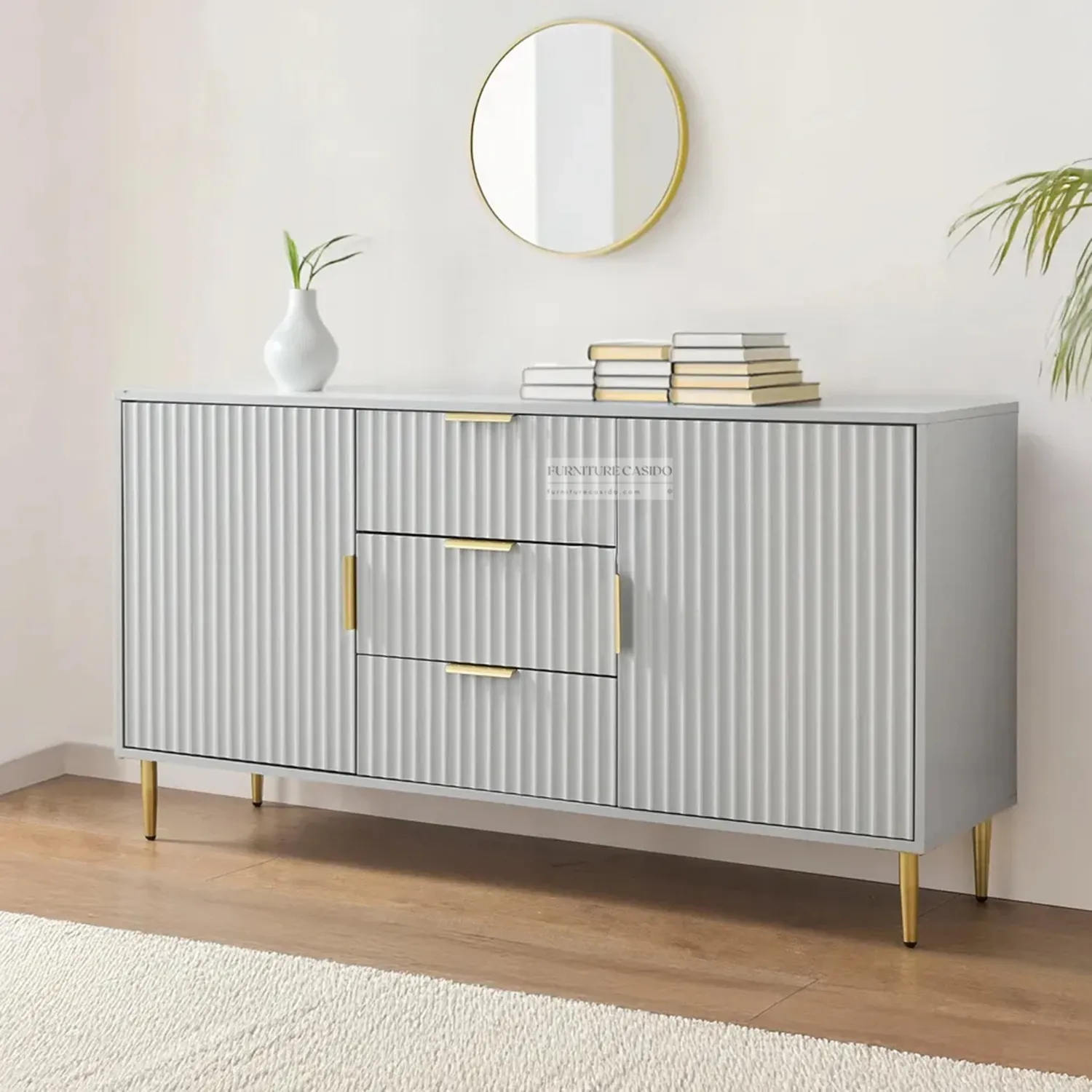
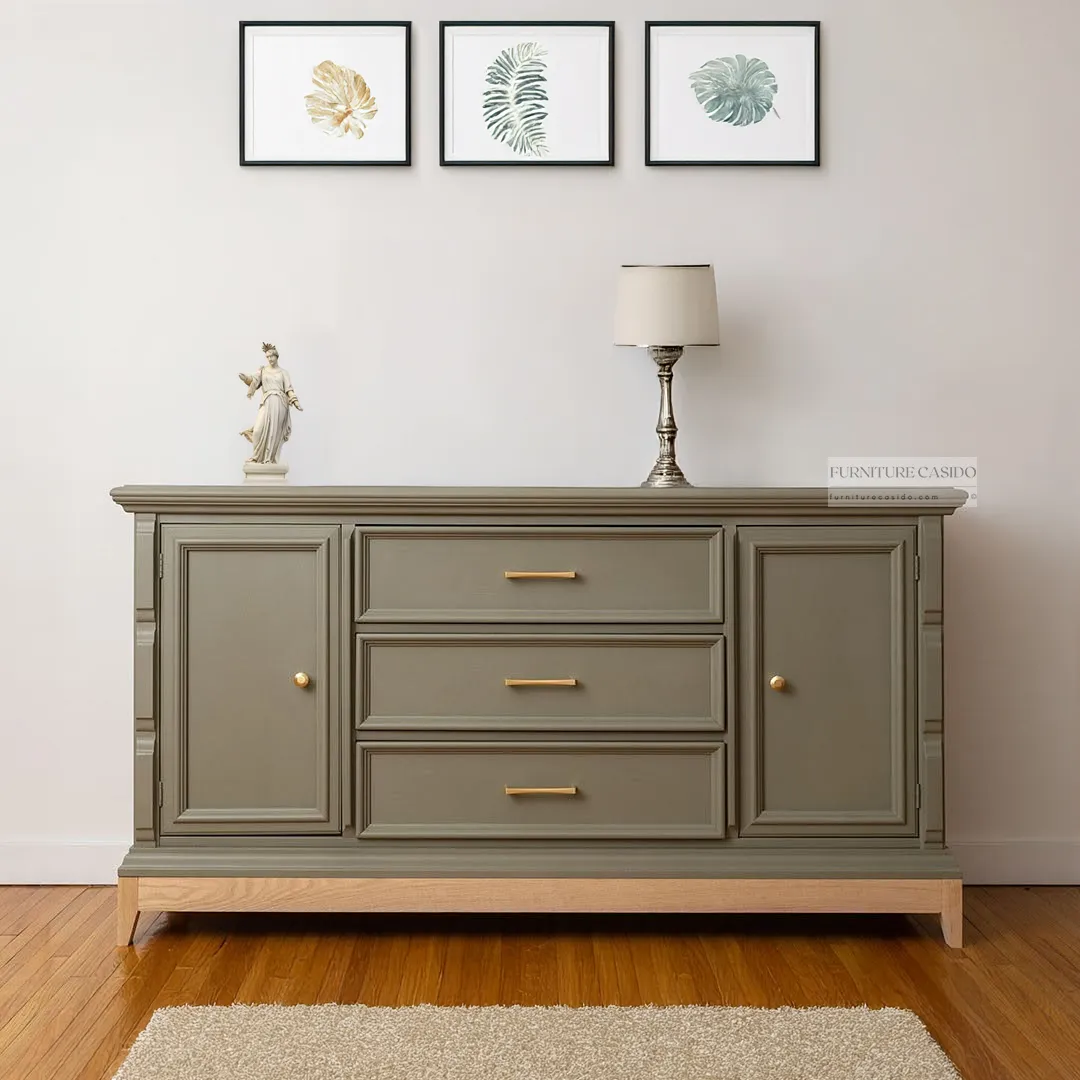
At Furniture Casido, this range of sideboard cabinet models is made for everyday household storage — not decorative pieces, but units meant to hold regular daily items safely and stay usable for years.
What This Furniture Is Usually Used For
A sideboard cabinet is usually bought when storage in the house starts spreading into visible areas — dining table, TV unit top, bedroom corners, or kitchen platform. People ask for it after shifting house, replacing an old steel almirah, or when crockery and daily items don’t have a fixed place. It gives closed storage that still looks acceptable in living or dining space. Most families keep plates, serving bowls, small appliances, documents, or extra household items that should stay accessible but not exposed.
Common situations we see in showroom
- After marriage setup when basic furniture is done but storage missing
- After moving to a new flat and wall space remains empty
- When dining table becomes a permanent storage surface
- When kitchen shelves become full and items shift outside
- When replacing old metal or steel storage units
What Customers Usually Ask Before Buying
First question is space — wall length matters more than room size. A large sideboard works only if walking space remains after opening shutters.
Families with children prefer shutters instead of open shelves to avoid dust and handling.
Frequent movers choose medium height pieces because tall cabinets are harder during shifting.
In rented homes, buyers usually avoid very wide units because layout changes in the next house may not suit them.
People planning long term use ask about hinge quality and internal shelf thickness, not just outer look.
Kitchen sideboard buyers check if the top can handle mixer, water purifier, or microwave weight.
Where This Usually Fits in a House
Behind dining table — most common placement for a wooden sideboard cabinet
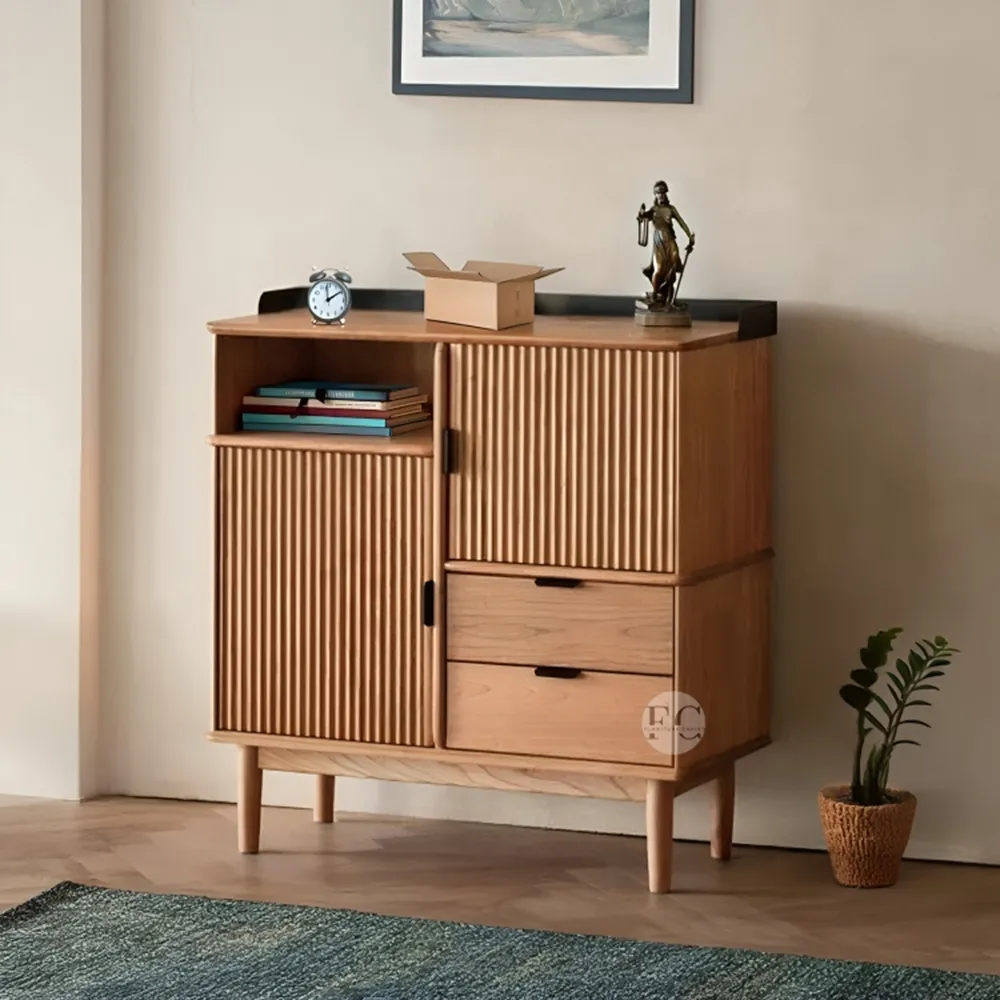
Under TV — works as a tv cabinet if height matches screen level
Passage wall — used for shoe boxes, documents, daily items
Beside kitchen opening — works like a flexible kitchen cabinet without permanent fitting
Entry wall — keeps keys, bags and frequently used items
Common Mistakes While Choosing
Common mistake: choosing by photo size. In reality, many buyers realize doors hit nearby furniture.
Another mistake: taking deep cabinet for small dining area — it blocks chair movement.
Many buyers forget ventilation. If storing utensils or appliances, fully airtight storage creates smell.
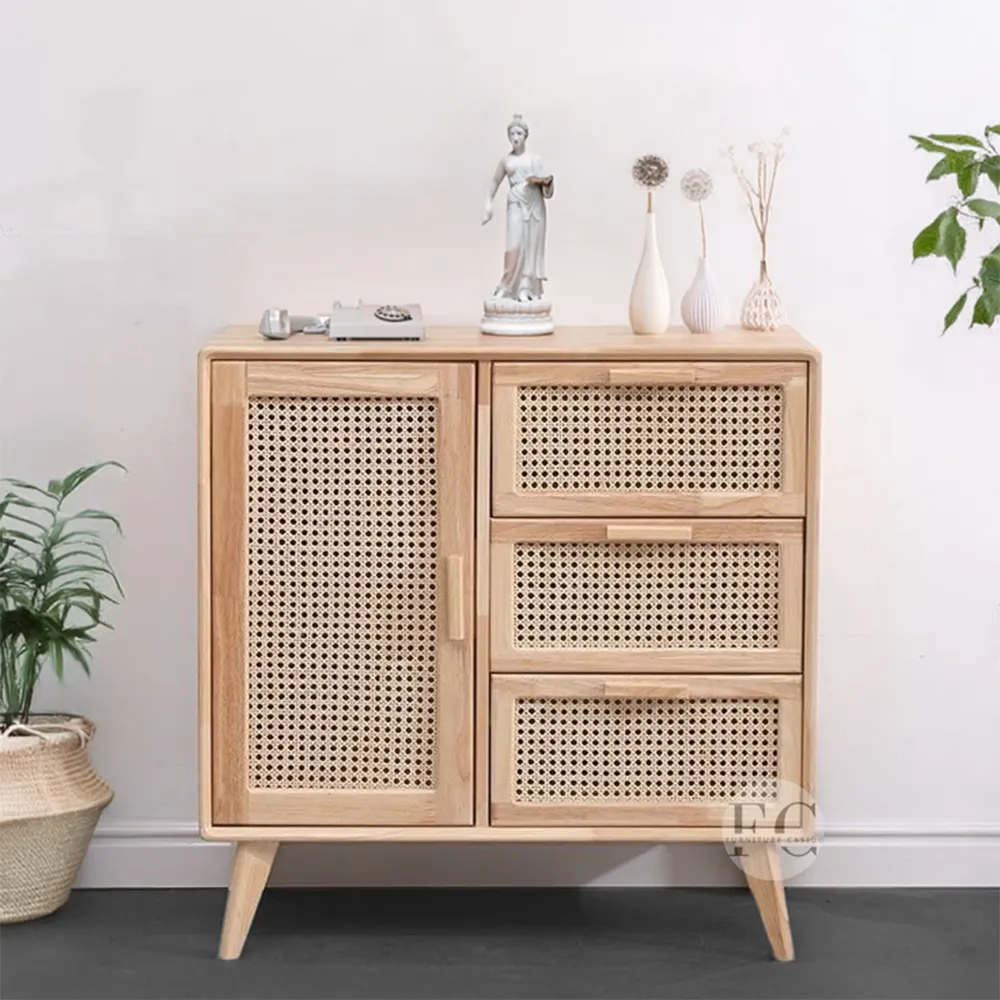
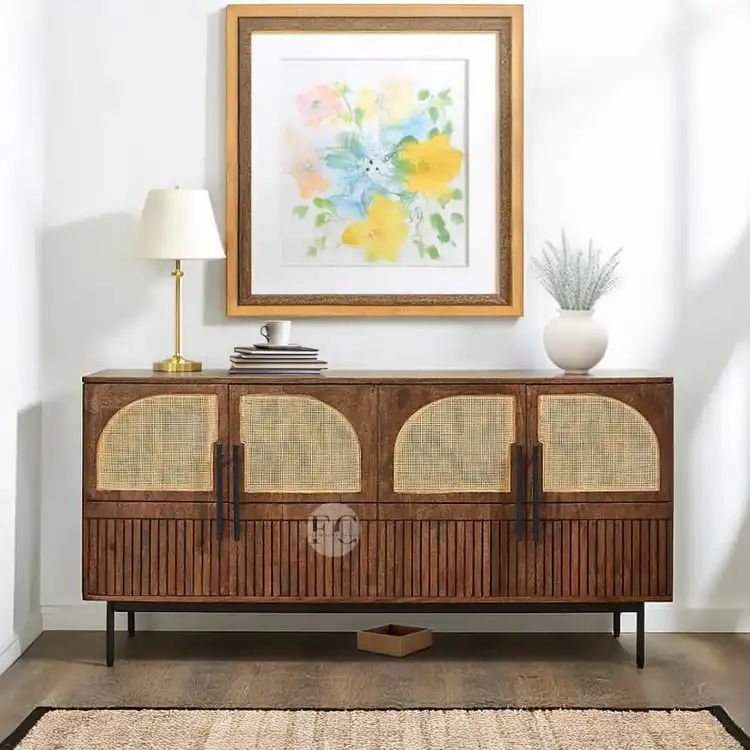
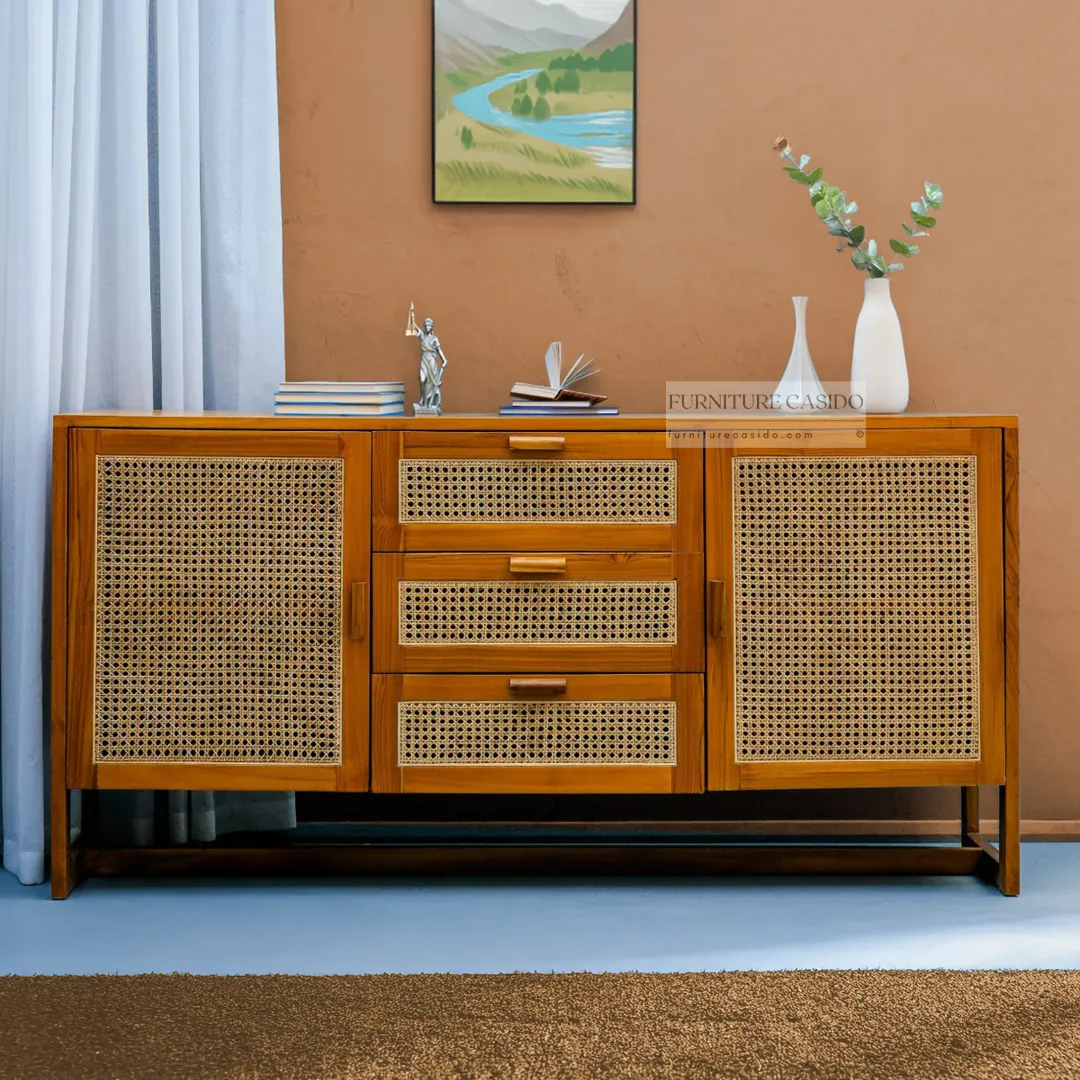
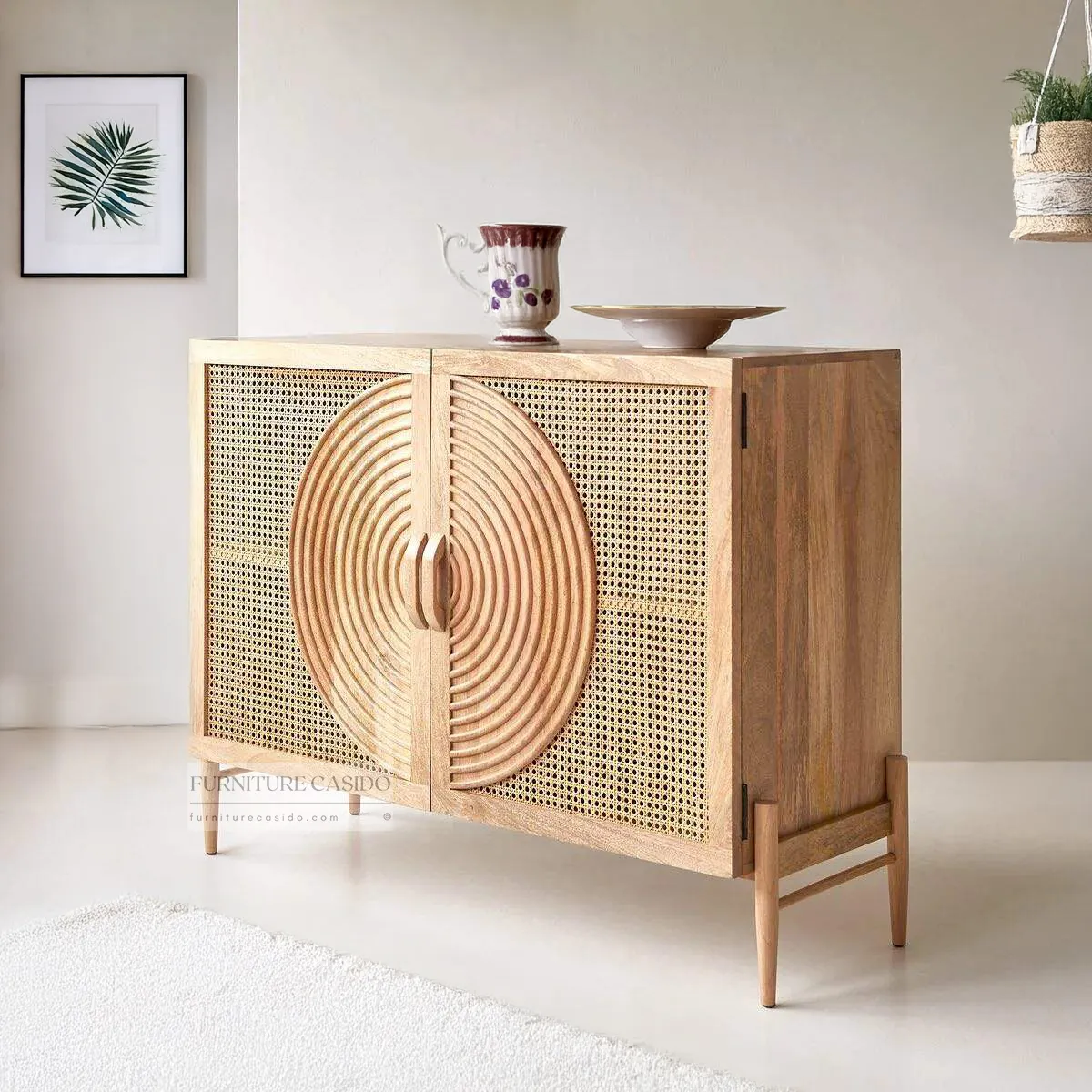
Do not choose a rattan sideboard for heavy utensil storage; it is better for light items.
People often overestimate drawer usage — shelves store more and stay organized longer.
Customers visiting our workshop usually bring old cabinets showing hinge or shelf bending issues, so we explain thickness before finalizing.
Check These Measurements First
Measure wall, not just available gap.
Keep 6–8 inch side clearance so shutters open fully.
Leave walking path minimum 30–36 inches in front.
Check shutter swing — especially near dining chairs.
For tv cabinet use, TV width should not exceed cabinet width.
Which Type Will Suit Your Use
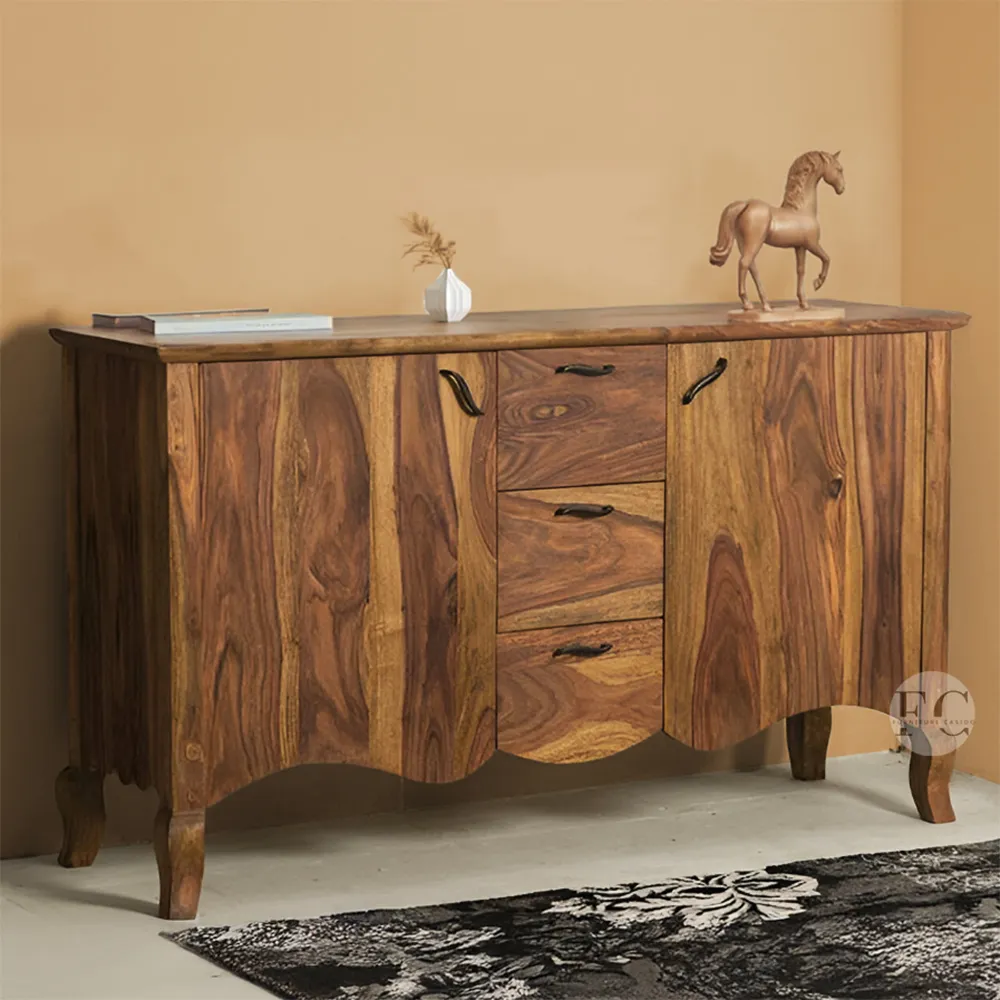
If the purpose is crockery and serving items, a wooden sideboard cabinet with shelves works better than multiple drawers.
For TV placement, a low tv cabinet is safer than a tall cabinet design because wire routing becomes easier.
Kitchen sideboard vs kitchen cabinet:
Kitchen cabinet suits permanent fixed setup. Sideboard suits flexible placement and shifting.
Rattan cabinet is chosen mainly for ventilation and lighter appearance, not for weight holding.
Large sideboard is useful in independent houses; in flats, medium width usually fits better.
Open shelf vs closed storage:
Open shelves look lighter but collect dust fast. Closed storage suits daily household use.
How It Is Built & What Affects Life
A proper wooden cabinet uses thick internal partitions, not just outer frame strength. Shelf thickness decides sagging over years.
Back panel quality matters — thin boards bend after loading.
Solid wood handles weight better but becomes heavier during relocation.
Rattan panels are framed inside wood; they are decorative and breathable but not structural.
Good hinges matter more than shutter thickness because daily opening causes maximum wear.
Leg support vs full base:
Full base distributes weight evenly. Legs make cleaning easier but need level flooring.
Wood movement happens slightly with seasons; small gap adjustment in shutters after years is normal and hinges may need tightening.
Dust cleaning is usually weekly in living areas and more frequent in dining areas.
Who Should Not Buy This
Not suitable if you change house every year and prefer foldable furniture.
Not needed if wall already has overhead storage or modular units.
Not ideal for storing very heavy items like large water cans or inverter batteries.
If room width is under 9 feet, a deep cabinet may create movement problems.
FAQs
1. What is the difference between sideboard and cabinet?
Sideboard is usually waist height and used in living/dining. Cabinet can be tall or wall mounted.
2. Can a sideboard cabinet be used in kitchen?
Yes, as a kitchen sideboard for extra utensils and appliances, but avoid placing near direct water area.
3. Is rattan sideboard strong enough for utensils?
For light to medium use only. Not for heavy steel containers.
4. How much weight can a wooden sideboard hold?
Suitable for crockery, books, and small appliances if shelves are thick.
5. Is it okay to use as TV cabinet?
Yes if height and wire outlet space match TV size.
6. Which wood sideboard is best?
Generally, a sheesham wood sideboard is considered good.
7. Does it require wall fixing?
Generally no, unless very tall model.
8. What size is safe for small flats?
Around 3.5 to 4.5 feet width fits most flats without blocking movement.